Furnace Repair vs Replacement in Alberta: How to Decide
Trade How-To · September 6, 2026 · 2 min read
By Morgan Reid
Alberta winters punish indecision. A $600 repair on a 18-year-old furnace can feel cheap in October and expensive by February when the next part fails. Use a simple decision matrix — not a salesperson’s urgency alone — to choose repair vs replacement.
The 15-year decision frame
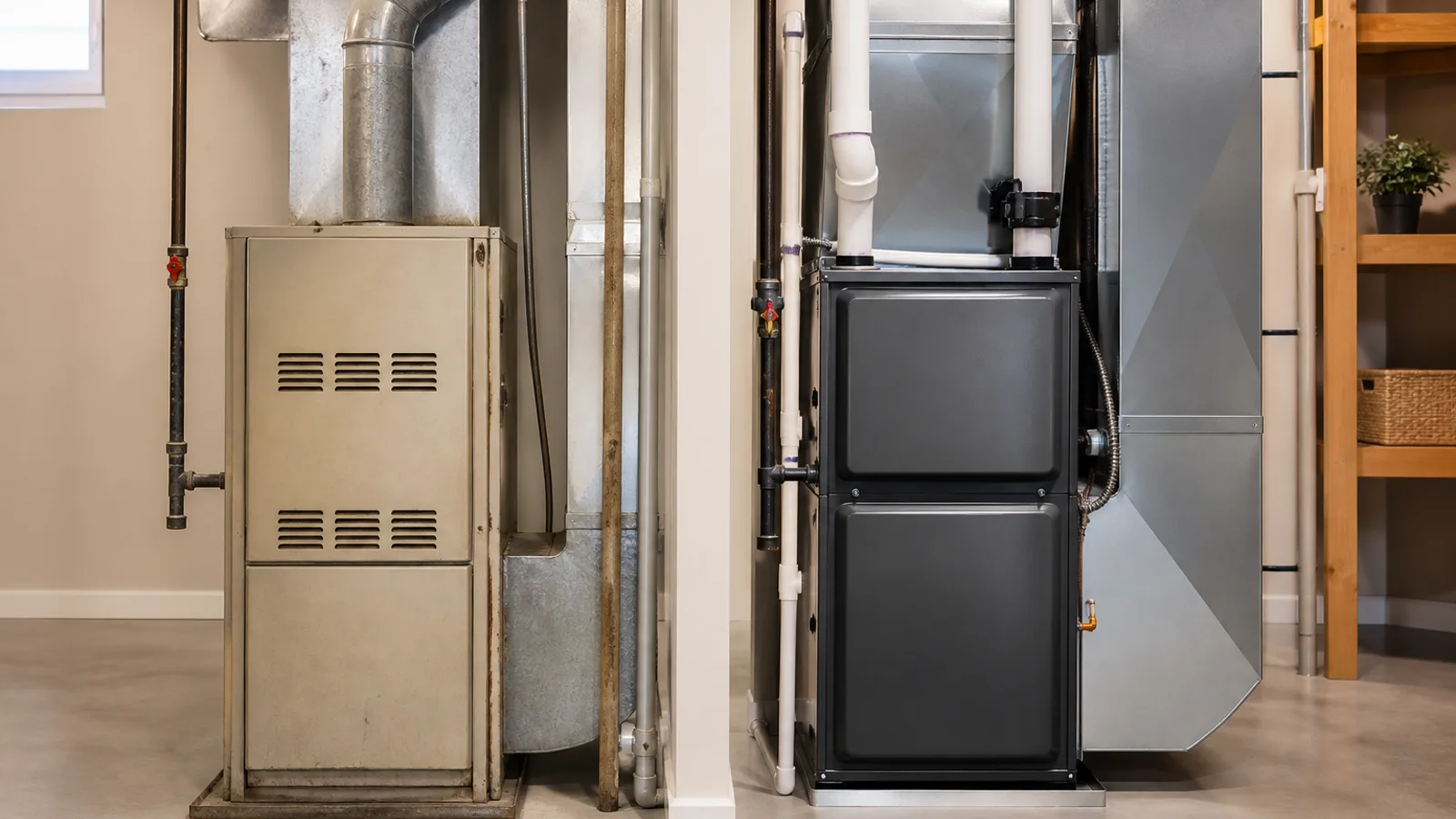
Most forced-air furnaces approach end of economical life around 15–20 years depending on maintenance and water quality in drain systems for high-efficiency units. Age alone does not condemn a furnace; age plus a major failed component usually does.
Repair vs replace matrix
| Situation | Lean repair | Lean replace |
|---|---|---|
| Age under 10 years | Yes — warranty or modest parts | Only if heat exchanger fails |
| Age 10–15 years | If repair < ~30% of replace cost | If repair is major and efficiency is low |
| Age 15+ years | Minor sensors/igniters only | Heat exchanger, cracked exchanger risk, repeated no-heat |
| Safety / CO concern | Never DIY patch | Replace after professional diagnosis |
Break-even math in plain numbers
Example: a $1,200 control-board and inducer repair on a 16-year-old 80% furnace vs a $6,500 installed 96% AFUE unit. If winter gas use drops enough to save ~$30–$50/month, the efficiency gain alone is not a two-year payback — but avoided repeat repairs and safety risk often tip the scale after 15 years.
Compare Alberta HVAC quotes the fair way
Start with HVAC technicians in Calgary or Edmonton, then post your furnace job free with age, model, and the technician’s diagnosis attached.
Frequently asked questions
- When should I replace a furnace instead of repairing it in Alberta?
- If the furnace is roughly 15+ years old, needs a major heat-exchanger or control-board repair, or a single repair exceeds about half the cost of a new mid-efficiency install, replacement usually wins on safety and operating cost.
- How much does a new furnace cost in Alberta?
- Installed mid- to high-efficiency furnaces commonly range from about $4,000–$8,000+ depending on AFUE, size, and duct modifications. Post your job to compare local quotes.
- Who should decide repair vs replace?
- A licensed HVAC technician should diagnose the failure. Use their written options — then compare a second quote on BuilderWorks before authorizing a full replacement.
Find a hvac technicians in your city
“Repair buys time; replacement buys certainty — after 15 Alberta winters, certainty is usually cheaper.”

Recent Post



Tags
Furnace
HVAC
Alberta
Repair
Replacement